


Micronized Creatine vs. Creatine Monohydrate
“Micronized” usually describes smaller particles, while “creatine monohydrate” identifies the creatine form. The terms are not direct opposites.
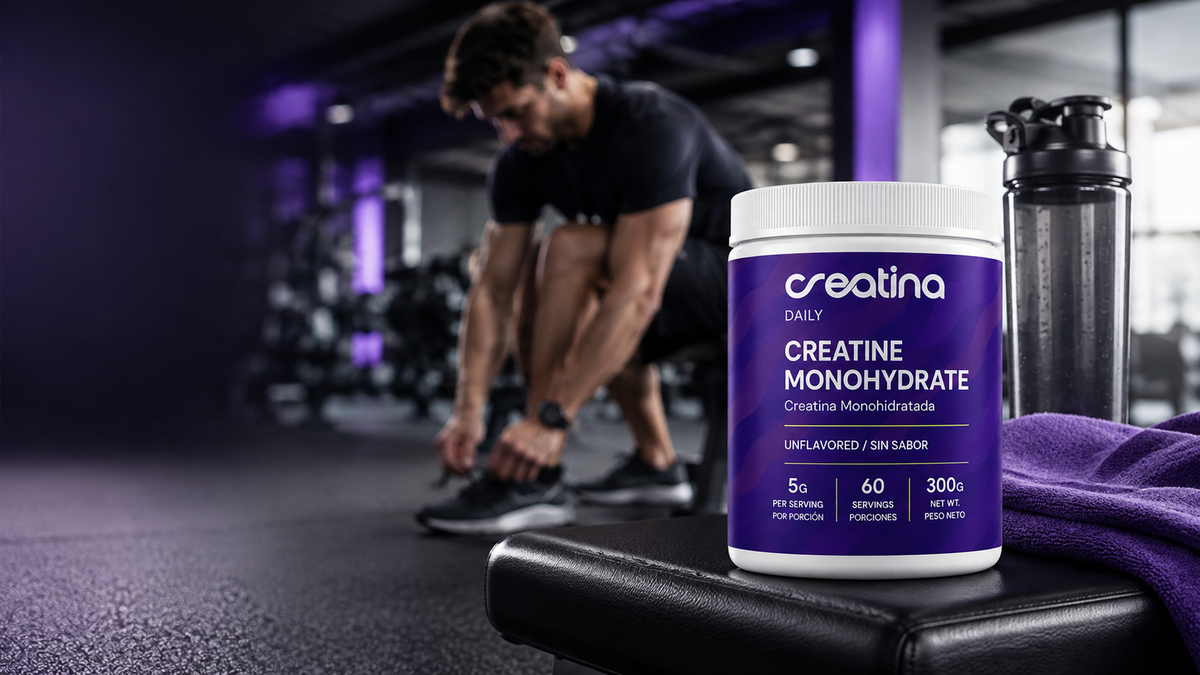
Micronized creatine and creatine monohydrate are often presented as if they are two competing ingredients. Usually, they describe different characteristics: creatine monohydrate identifies the chemical form, while micronized describes particle size.
What is creatine monohydrate?
Creatine monohydrate is the most extensively studied supplemental form of creatine. Reviews and professional position stands consistently identify it as the reference form for bioavailability, efficacy, safety, and value.
What does micronized mean?
Micronization is a manufacturing process that reduces powder particle size. Smaller particles can change how a powder disperses, feels in a beverage, or settles. Micronization does not create a new chemical form when the ingredient remains creatine monohydrate.
A product can therefore be both:
- Creatine monohydrate, because that is the ingredient form.
- Micronized, because the powder has been processed to a smaller particle size.
Does micronized mean more effective?
Smaller particles may affect mixing characteristics, but the word micronized by itself does not demonstrate greater physiological effectiveness. To support a superior-effect claim, a product would need appropriate comparative evidence rather than particle-size language alone.
How should shoppers compare labels?
Review the complete product information:
- Ingredient identity: Does the label say creatine monohydrate or another form?
- Amount per full serving: How many grams of creatine are provided?
- Serving count: Does net weight divided by the serving amount match the stated count?
- Other ingredients: Is it unflavored, flavored, sweetened, or blended?
- Quality language: Does a claim identify the product, ingredient, lot, test, or document it actually covers?
What about other forms of creatine?
Alternative creatine ingredients are marketed with claims involving absorption, stability, dose, or effectiveness. Systematic and critical reviews have found that creatine monohydrate remains the form with the strongest overall evidence and that alternative forms have not consistently demonstrated superiority.
The practical distinction
Choose the ingredient form first. Treat micronization as a powder-processing characteristic that may affect the user experience, not as automatic proof of better results.
Creatina Daily identifies creatine monohydrate as its active ingredient and presents the complete serving and container math directly. The Testing & Transparency page explains how Creatina separates product facts from the scope of available documentation.
Sources
- Fazio C, Elder CL, Harris MM. Efficacy of alternative forms of creatine supplementation: a systematic review. PubMed.
- Kreider RB, Jäger R, Purpura M. Bioavailability, efficacy, safety, and regulatory status of creatine and related compounds: a critical review. PubMed.